The heavy fog has enshrouded the rainforest and neither moonlight nor the firefly’s intermittent flicker can pierce the obscurity. It’s pitch black. I awaken in the unfinished cabin, a small and simple abode elevated high off
the ground to instil the sense of living in a tree house. For all the years I have slept here, it remains without doors and windows, so pure fresh air is my companion of the night. I look at my watch…4:30 a.m. Slowly waking, I realize that our resident jaguar is likely still hunting and it will be another half an hour before the playful paxas (pashas) announce the break of day.
The Mayan paxa is perhaps my favorite bird, not for his beauty, as he only sports black plumage and resembles nothing more than a lowly chicken. He can hardly be admired for his melodic song either, because he has none. Rather, he is held in awe for his thrilling aerial antics. This is the bird that announces dawn and this is the bird that bids farewell to the day with as much gusto and style as any high diving pilot performing in a July 4th air exhibition. The paxa introduces his show with a loud rifle-like crack immediately followed with the staccato rat-tat-tat of a New Year’s Eve noisemaker, then gleefully executes his high dives and swoops with a pretentious air. More than once, as he mischievously zooms through my open porch, his din has knocked me out of my sleep and almost onto the floor.
However, this morning it is not the paxa that has awakened me, but voices, muted by the morning mist. Two students have descended the mountain
trail, carrying an enormous pot of dough just ground on the motorized corn grinder. The next sound–firewood being chopped. And the next–pots rattling. At the Mayan Center, every student has daily work duty. These students are on kitchen assignment. Others, rising later, clean the goat stable, feed and water the chickens and collect eggs. Yet others clean the school, weed the vegetable garden, or perform one of the more unpalatable tasks, such as scattering odor-killing wood ash down the latrines.
Whereas the Center employs a cook, it’s the students who really make the kitchen hum. The peel the vegetables, cook the morning atol, (a hot drink
made from boiled rice or corn served with sugar and cinnamon), and serve up the food. But their primary expertise is the complicated task of making 300 corn tortillas every morning. The first step is to build a hearty fire on the ground outside. Once hot, the comal (a large flat pan) is set on top of the flames, and the process begins. A “tortilla work group” usually consists of four students, three boys and one girl. I would imagine that the girl is present to give the boys faith, as tortilla-making is definitely not on the list of a Mayan’s boy tasks at home. But they are good natured about it, chattering and joking as one forms the dough into balls, another flattens it in the press, and the third cooks. And while the tortillas don’t turn out like those that Mom makes, hungry kids devour them nonetheless.
At times, I wonder what they think, working, playing and studying in this remote wilderness. What would I think, I wondered, if I had had such an opportunity in my youth? I think I would have loved it. No standing in line in the hall, military fashion, waiting for the teacher to give the OK order to enter the classroom. No constant clanging alarms announcing the end of one class and the beginning of another. No entrapment all day within drably painted cement walls.
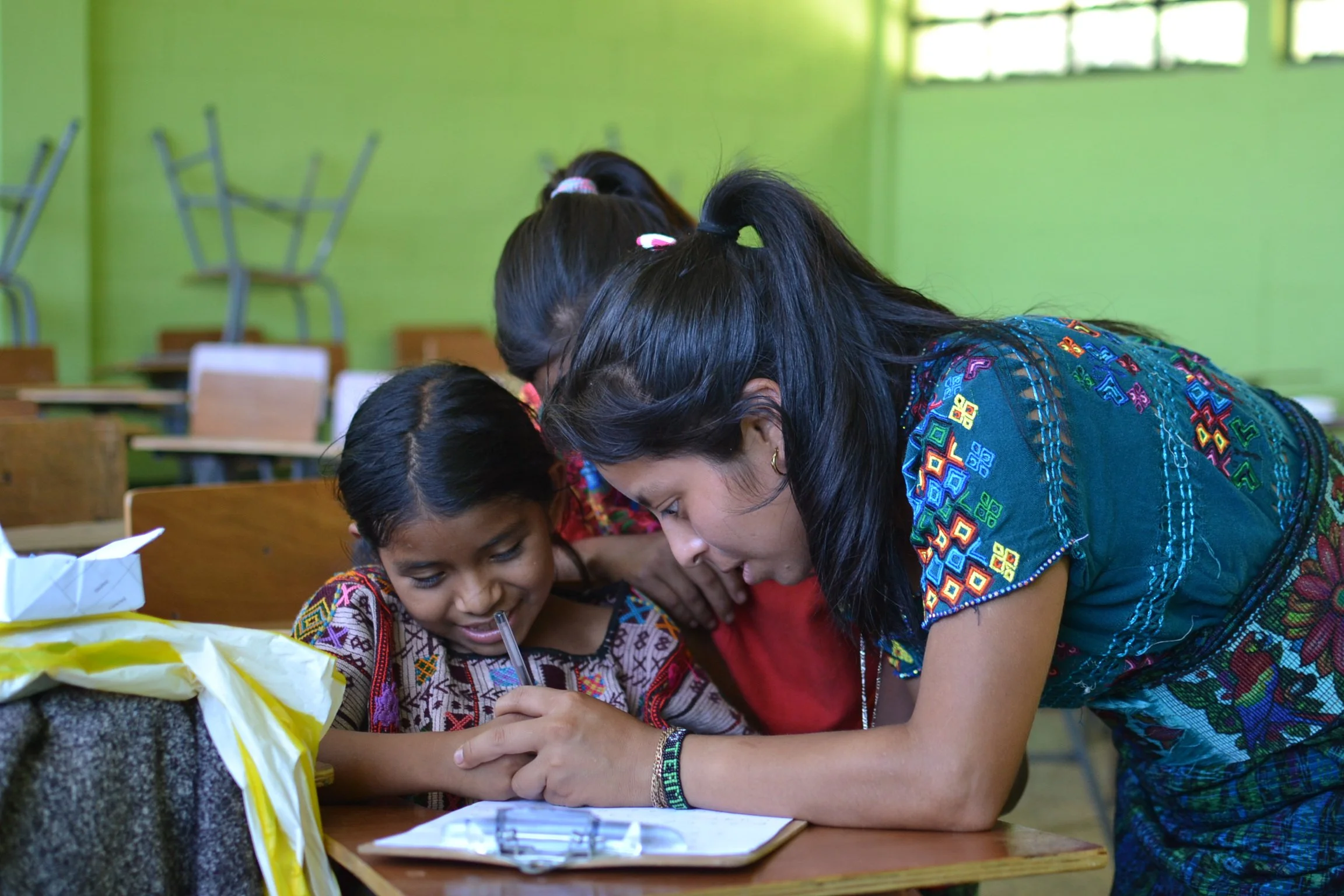
The Mayan Center is a unique residential high school set in a magnificent and remote rainforest, designed to provide a perfect environment for serious study. The students understand why they were chosen for their scholarships–to learn and to become future leaders in their communities. They take their education to heart, expressing their gratitude not just verbally, but by their enthusiastic participation in all aspects of their studies and maintenance of their school. Last week, when school director Pedro Sebastian and I were viewing the creative decorations made by the kids and placed in every classroom, he commented, “The students really love their school.” I mentally added, “and their new friends, their cozy cabins, the fresh mountain air, and the joyful bird songs that waken them every morning.”