Adopt-a-Village in Guatemala

Adopt-a-Village in Guatemala

a partnership for education

  • HOME
  • ABOUT US
    • History
    • Who we are
    • Where we work
    • What we do
  • OUR PROGRAMS
    • Child Sponsorship
      • Children awaiting sponsors
    • The Mayan Center
    • Orphans and Widows
    • Medical Emergency Fund
  • GET INVOLVED
    • Volunteer
    • Give now
  • CONTACT US
  • AAV BLOG

A Message from Alaska

Posted in AAV by admin
Apr 12 2010
TrackBack Address.

Connie Cloud is an air traffic controller in Alaska who commutes 850 miles to her job. (By air). Fifteen years ago, she became involved with Adopt-a-Village.

Connie's Message

She writes: “Over the years, I have sponsored three beautiful children. I have loved receiving their letters and photos and feel like I have played a small part in their lives. During that time, I have watched Adopt-a-Village spread its tiny roots to become a major source of aid in northwest Guatemala. I am proud to be part of this fine organization!”

Connie expanded her involvement when she learned about AAV’s Mayan Training Center. “I knew right away that I wanted to become part of this grand vision. I knew I had been one of the lucky ones—through nothing more than being born in the right place in the world. I had parents who would see to it that I would be educated. One the other hand, because Mayan children were not born in the “right” place, they are being denied. I thought about all the girls who are destined to a life of grinding poverty and hard labor, bearing children and beginning their work before daylight and continuing on into the night. I knew that by helping one of those girls with a scholarship, she would have hope for a better life. I truly want that for one Mayan girl”.

Connie told us she needs help to succeed in reaching her goal. “As much as I want to fulfill a child’s dream, I too have been affected by this bad economy. Nevertheless, I am determined to find a way to fund a scholarship. My plan? To find others who will join me and share the fees. I am excited to say that my first partner is an Alumni group of women in New York who are contributing 25% of the scholarship—$500. A scholarship covers the cost of room and board, textbooks, school materials, and a portion of the teachers’ salaries—a small percentage of what it would cost to board a child at a residential high school here in the States.”

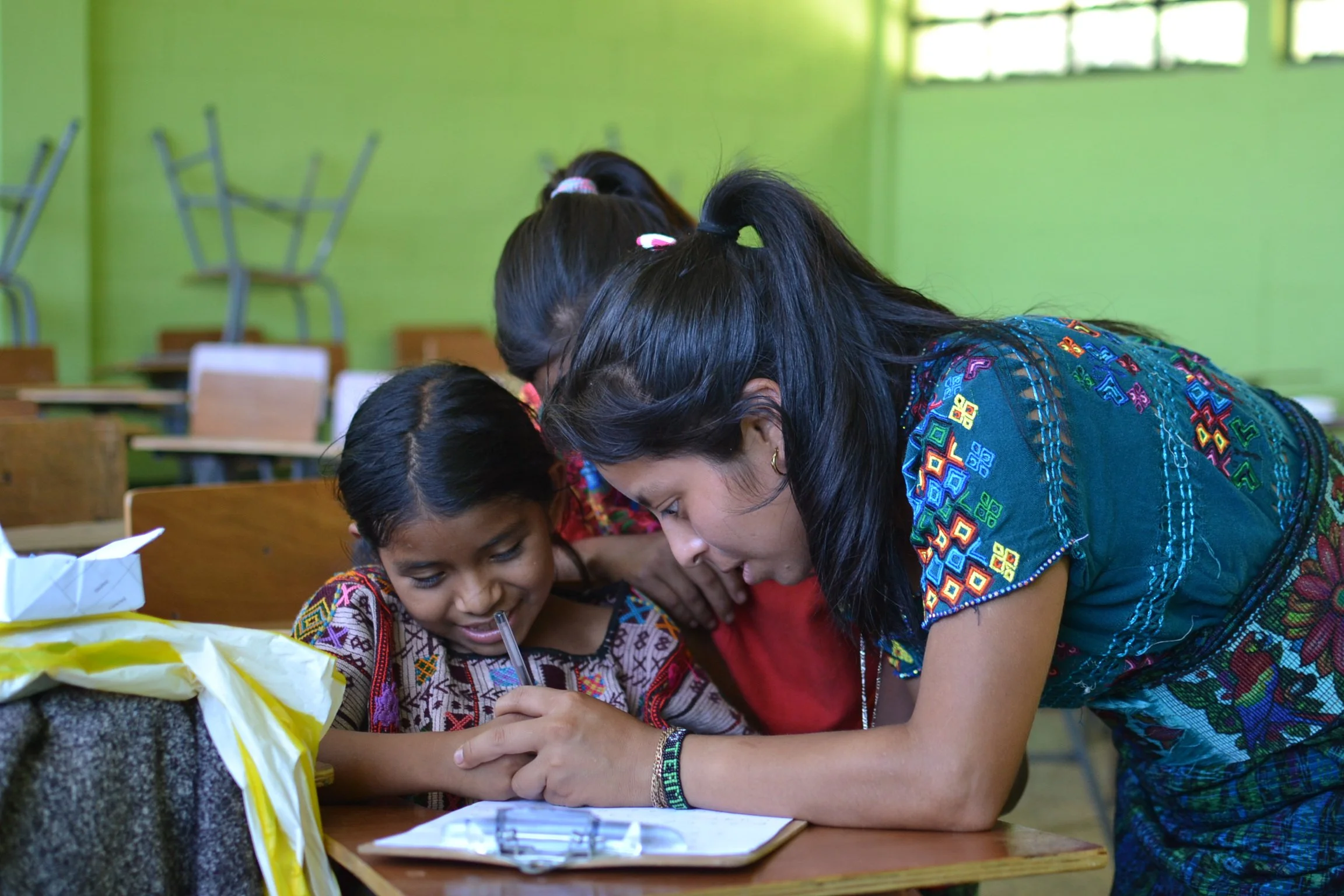
“I am helping Noelia, a 15-year old Mayan girl, the school’s youngest child. She speaks one of Guatemala’s 23 ethnic languages, Q’anjob’al. She follows Mayan tradition by wearing the long foot-loomed skirt called a “corte.” She is the middle child of eight and the only one to attain an education beyond sixth grade. The family lives in a tumbledown shack on the edge of the road. Everyone in the family, including Noelia, works in the fields to eke out a basic living.”

If you would like to become part of Connie’s scholarship partnership to help Noelia complete her high school, please contact her at cccloud@gci.net and bring education and a happier and brighter future to a Mayan girl.

Frances

No Comments yet »

Politics of Mayan Theater

Posted in AAV by admin
Apr 03 2010
TrackBack Address.

Dear Readers,

I thought the play was to be a comedy. The kids were giggling. As they readied themselves backstage, I caught glimpses of some outlandish costumes. They had used whatever they could find at hand—plastic, paper, borrowed clothing, tree branches. What ingenuity!

Opening set: A father, carrying his sick son his back, staggered into a doctor’s office, his ragtag family trooping in behind him. What would follow would be a clear and true depiction of how life plays out in the lives of impoverished Mayan families.

The overall theme of the production provided an example of how the Maya cope with their health emergencies. The father wavered on his feet after having carrying his 10-year-old child for many miles on his back. The entire extended family (including granddad, hunched over and hobbling along on a handmade cane) had trekked out of the mountains, desperately afraid for the wellbeing of the boy. Distraught, the mother began crying, imploring the doctor to treat her son. Everyone feared the possibility of an operation. The Maya believe strongly that if you take someone to the hospital, most likely that person will not leave alive.

The doctor affirmed that yes, indeed, the boy’s condition was serious and the doctor must operate. The family grew alarmed. Not only could they lose the child, but in order to pay for the operation, they would lose everything they possessed. They would be destitute. The doctor crossed his arms, named his exorbitant fee, and refused to begin surgery until he received the money.

At that point, I was painfully reminded of the time Adopt-a-Village had transported a young man suffering with a compound fracture to his leg to a hospital, a distance of 12 hours over a bone-jolting four-wheel drive road. At government hospitals in Guatemala, surgeries are free for the poor. Or so I understood. Several days later, I understood differently. There was a catch. Or better said, several catches.

Although penniless, this young patient would be responsible to pay for his medications, (including anesthesia), food, water, soap—even toilet paper. The final catch—he was responsible to purchase and deliver to the doctor the metal screws that would secure his fractured bones.

It was four days later, after the patient had suffered intense and unrelenting pain, that the family was finally able to find a lender. His brother purchased the screws in a distant city and brought them to the doctor. As a hospital requirement, he was required to stay at the hospital, sleeping on the floor beside his brother’s cot. His job was to purchase food and water for the patient and attend to his daily needs. The entire incident left me with only one thought. “Barbaric.”

The play followed a similar story line. Hovering over the child’s limp body, the mother begged her husband to rush to find a buyer who would purchase their small hut. It was sold at a deeply discounted price, leaving the family completely destitute. The doctor, money in hand, operated. The only happy ending to this play was that the child lived.

I learned something important that day from our students. They are keenly aware of the inequities of the political and social order under which they live. It’s part of being indigenous in Guatemala. It was neither through the spoken word nor the written word that they communicated their awareness, but through the medium of theater, a safer form of expression for them.

AAV’s foremost goal is to train our students in leadership skills. By demonstrating that they are able to express a clear understanding of the inequalities in their lives, our Mayan Center students have taken the first step toward becoming future leaders in their communities.

Frances

P.S. I very must appreciate receiving your comments. Please continue to write to me.

3 Comments »

Pages

  • Home
  • ABOUT US
    • History
    • Who we are
    • Where we work
    • What we do
  • OUR PROGRAMS
    • Child Sponsorship
      • Children awaiting sponsors
    • The Mayan Center
    • Orphans and Widows
    • Medical Emergency Fund
  • GET INVOLVED
    • Volunteer
    • Give now
  • CONTACT US
  • AAV BLOG

Categories

  • AAV
  • mayan center
  • students
    • girls
  • volunteers

Archives

  • September 2010
  • August 2010
  • July 2010
  • June 2010
  • May 2010
  • April 2010
  • March 2010
  • February 2010
  • January 2010

Meta

  • Log in
  • Valid XHTML
  • XFN
  • WordPress
  • Using jQuery Colorbox
  • Using jQuery Colorbox
  • Powered by WordPress | “Blend” from Spectacu.la WP Themes Club