Adopt-a-Village in Guatemala gives thanks to Emily Jones, a longtime supporter of AAV, for all her hard work in hosting a fundraiser to purchase books for the Adopt-a-Village high school. The Seattle event, “Dinner with a Doctor,” was sponsored by the University of Washington’s “Hand2Hand” pre-health philanthropy and community-service group, of which Emily is the co-activities coordinator. Jill Hodges presented our organization’s programs with the acclaimed video she filmed and produced for AAV. The event was attended by 45 of the university’s students interested in pursuing a career in healthcare, as well as medical professionals, including the Chief of Surgery from Harborview Hospital and the Chief of Pediatrics from Seattle Children’s Hospital.
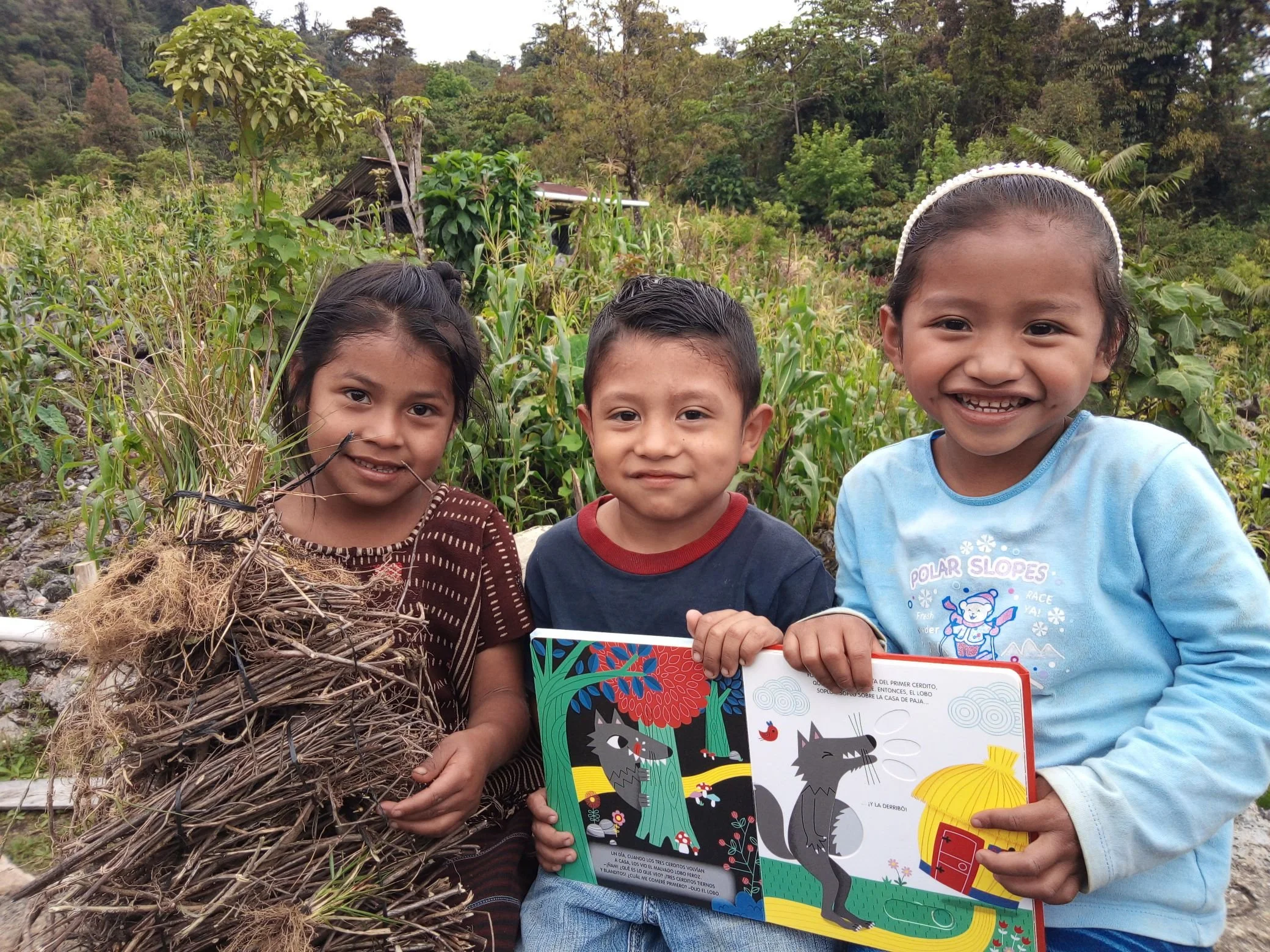
Emily is an enthusiastic AAV volunteer and child sponsor of an eight-year-old girl, Maricela, (see photo) who lives in the remote village of Nuevo San Ildefonso. Fifteen years ago, young Mam families settled the tiny community, naming it for their home town where land was overworked and in short supply. They migrated to the only location they could afford to purchase land—a distant and remote area in northwestern Guatemala. Today, Maricela lives with 10 other families where they eke out a living by growing coffee on small plots terraced on the hot, low-lying mountainside. When the coffee harvest is over, they migrate to the coast in search of seasonal work.
Life in Nuevo San Ildefonso entails daily hardships. It is a pioneer life in every sense. Land was cleared by hand and, for 15 years, families had to transport all building materials, food and supplies on their backs up a long winding trail. Family homesteads consist of crudely constructed cottages where chickens scratch around and pigs prepare themselves for market. The village’s only burro is used to transport firewood. A rustic wooden structure built by fathers serves as the one-room schoolhouse. When the government refused to send a teacher because the village lacked the obligatory 25 school children, families fought their case and won, an unusual achievement in Guatemala. Currently, after months of back-breaking labor working with picks and shovels, the village men are nearing the completion of their rough four-wheel drive road.
Adopt-a-Village has lent a hand to these hardworking families over the years, supplying rainwater catchment tanks, supplies, materials, and a school library, emergency food, and training in animal husbandry for several village members.
Despite their harsh way of life, the people of Nuevo San Ildefonso have a strong and positive spirit. They do not give up even in the face of their defeats. They are an inspirational people, and Adopt-a-Village is proud to call them friends.
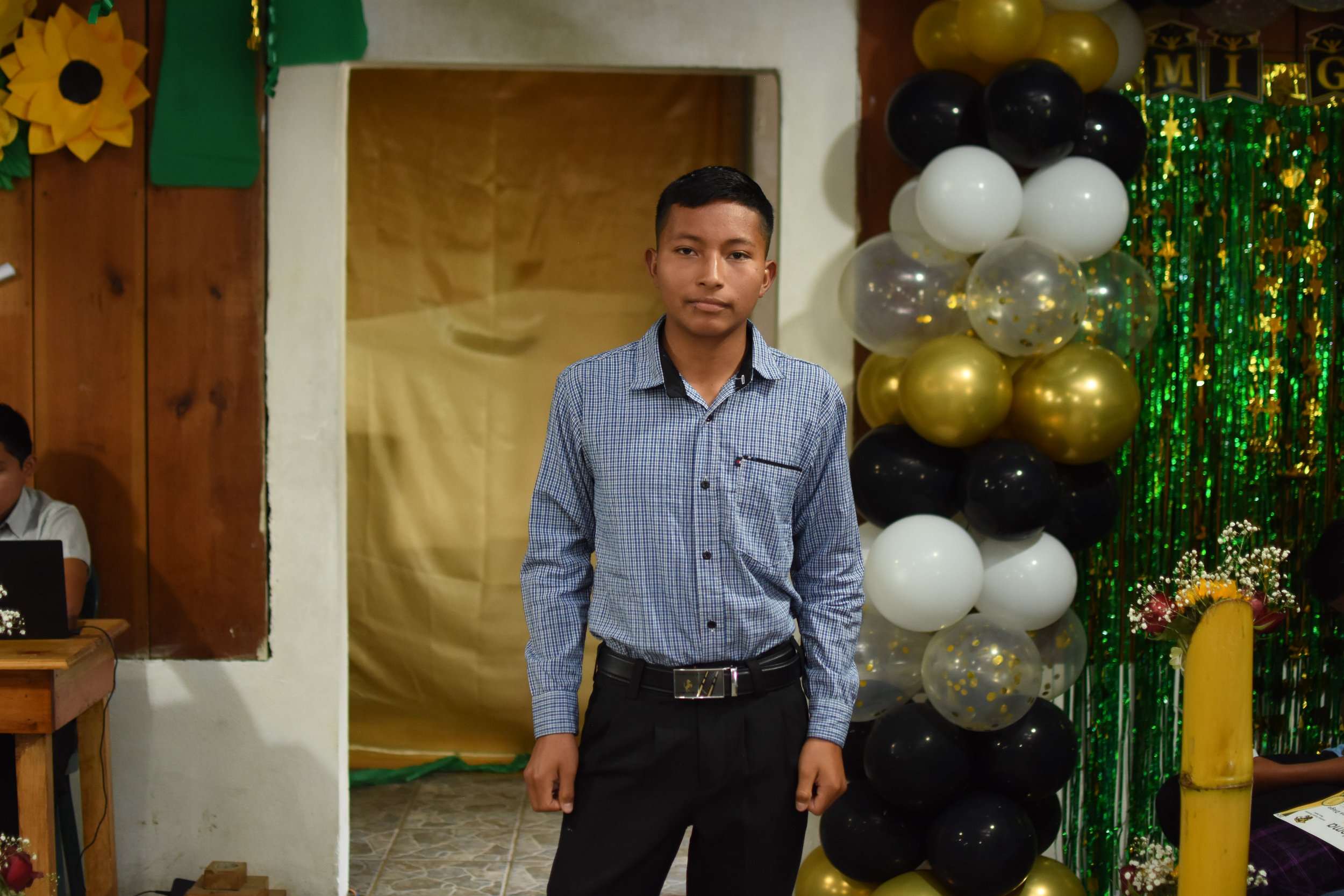
On May 1st, the people of Santa Cruz Barillas, local seat of government and regional commercial of center of 200,000 inhabitants, viewed the award-winning float created by our Mayan Center’s high school students. Attired in costumes reminiscent of the ancient Maya, students proudly presented their creation. Draped in large paintings of mythical Mayan gods with a massive jaguar constructed of wood and paper Mache on top, the unique float brought cheers from the onlookers.
These Mayan students had been awarded scholarships from Adopt-a-Village in Guatemala based on academic excellence and leadership abilities. Their presentation was a demonstration of their skills, creativity, and ability to organize. Their motivation—a deep pride in their school. Student council president, Floridalia López, expressed this pride when she said, “This is our first year. We need to let everyone know we are an important part of the community”.
The heavy fog has enshrouded the rainforest and neither moonlight nor the firefly’s intermittent flicker can pierce the obscurity. It’s pitch black. I awaken in the unfinished cabin, a small and simple abode elevated high off
the ground to instil the sense of living in a tree house. For all the years I have slept here, it remains without doors and windows, so pure fresh air is my companion of the night. I look at my watch…4:30 a.m. Slowly waking, I realize that our resident jaguar is likely still hunting and it will be another half an hour before the playful paxas (pashas) announce the break of day.
The Mayan paxa is perhaps my favorite bird, not for his beauty, as he only sports black plumage and resembles nothing more than a lowly chicken. He can hardly be admired for his melodic song either, because he has none. Rather, he is held in awe for his thrilling aerial antics. This is the bird that announces dawn and this is the bird that bids farewell to the day with as much gusto and style as any high diving pilot performing in a July 4th air exhibition. The paxa introduces his show with a loud rifle-like crack immediately followed with the staccato rat-tat-tat of a New Year’s Eve noisemaker, then gleefully executes his high dives and swoops with a pretentious air. More than once, as he mischievously zooms through my open porch, his din has knocked me out of my sleep and almost onto the floor.
However, this morning it is not the paxa that has awakened me, but voices, muted by the morning mist. Two students have descended the mountain
trail, carrying an enormous pot of dough just ground on the motorized corn grinder. The next sound–firewood being chopped. And the next–pots rattling. At the Mayan Center, every student has daily work duty. These students are on kitchen assignment. Others, rising later, clean the goat stable, feed and water the chickens and collect eggs. Yet others clean the school, weed the vegetable garden, or perform one of the more unpalatable tasks, such as scattering odor-killing wood ash down the latrines.
Whereas the Center employs a cook, it’s the students who really make the kitchen hum. The peel the vegetables, cook the morning atol, (a hot drink
made from boiled rice or corn served with sugar and cinnamon), and serve up the food. But their primary expertise is the complicated task of making 300 corn tortillas every morning. The first step is to build a hearty fire on the ground outside. Once hot, the comal (a large flat pan) is set on top of the flames, and the process begins. A “tortilla work group” usually consists of four students, three boys and one girl. I would imagine that the girl is present to give the boys faith, as tortilla-making is definitely not on the list of a Mayan’s boy tasks at home. But they are good natured about it, chattering and joking as one forms the dough into balls, another flattens it in the press, and the third cooks. And while the tortillas don’t turn out like those that Mom makes, hungry kids devour them nonetheless.
At times, I wonder what they think, working, playing and studying in this remote wilderness. What would I think, I wondered, if I had had such an opportunity in my youth? I think I would have loved it. No standing in line in the hall, military fashion, waiting for the teacher to give the OK order to enter the classroom. No constant clanging alarms announcing the end of one class and the beginning of another. No entrapment all day within drably painted cement walls.
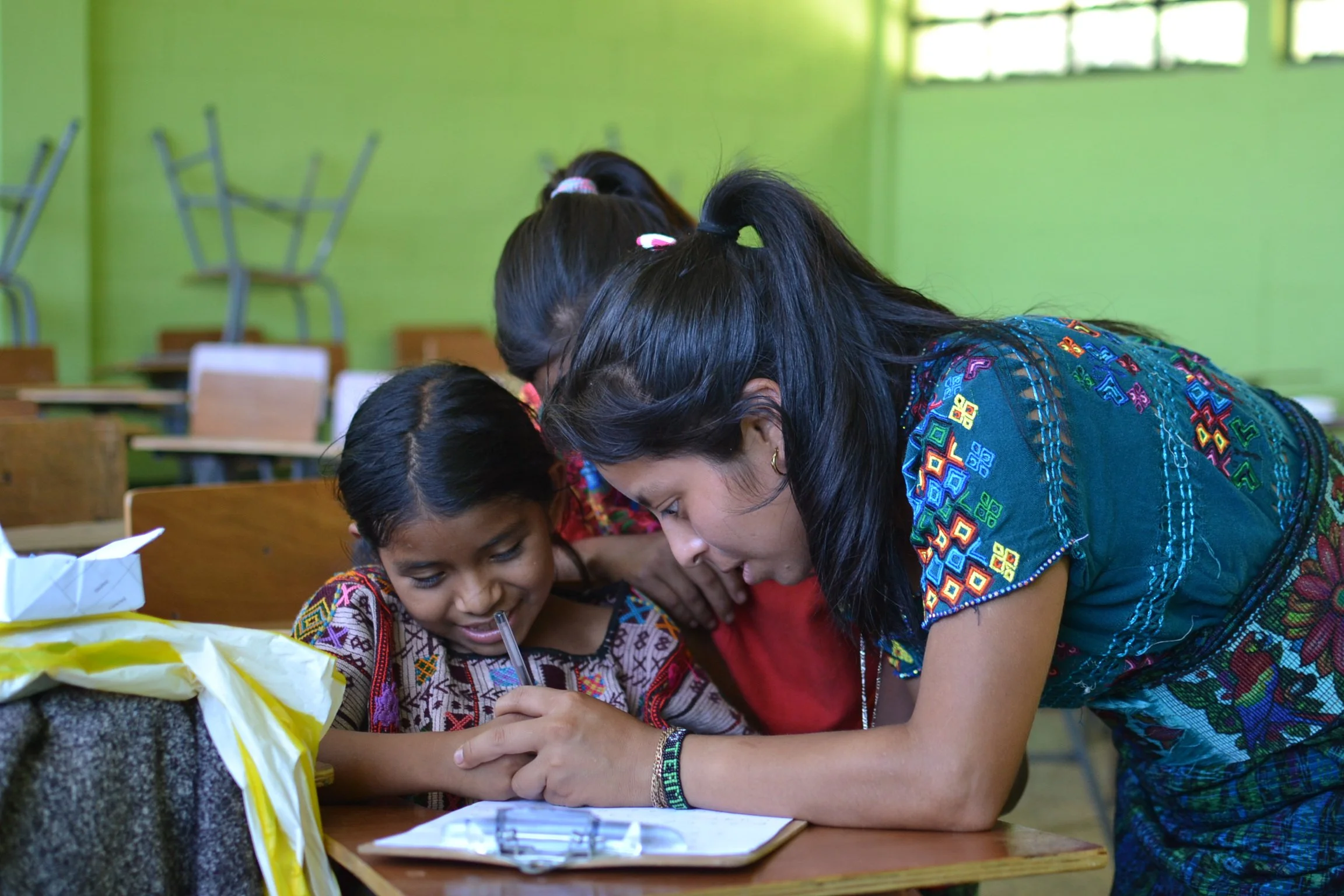
The Mayan Center is a unique residential high school set in a magnificent and remote rainforest, designed to provide a perfect environment for serious study. The students understand why they were chosen for their scholarships–to learn and to become future leaders in their communities. They take their education to heart, expressing their gratitude not just verbally, but by their enthusiastic participation in all aspects of their studies and maintenance of their school. Last week, when school director Pedro Sebastian and I were viewing the creative decorations made by the kids and placed in every classroom, he commented, “The students really love their school.” I mentally added, “and their new friends, their cozy cabins, the fresh mountain air, and the joyful bird songs that waken them every morning.”